


Have you ever received messages like these?
You have an outstanding tax refund of £200 from 2020 to 2021. Claim your tax refund at https://gov-tax.refundpr.com/
This link will then try to get you to enter your personal details.
Or,
HMRC has sent you this notification since your eligibility has been checked. We owe you 700 GBP. Click on this link to get your tax refund.
These are common HMRC tax refund scams that have been reported and anyone can fall prey to these, so it’s important to be aware of them and understand how to not fall for them.
What Is an HMRC Tax Refund?
If you’ve paid too much tax within the tax year, HMRC would owe you a tax refund.
Now, how would you be notified if you’re eligible for these refunds by HMRC?
If you are due an HMRC tax refund, HMRC will inform you by sending out a simple assessment letter or the P800 letter by post.
This assessment or P800 letter usually arrives after the tax year has ended in April of every year. With the help of this letter, you can find out if you can claim your tax rebate online through the government’s website. The key to pay attention to is that this letter will not ask you to provide personal or bank details to claim your tax rebate.
Once your tax has been claimed online via the safe HMRC website, the refund will be credited to your registered bank account within 5 days.
You have another choice too. You could wait 45 days and HMRC will send a tax rebate cheque to you by post.
If you think you’ve overpaid your tax but haven’t received an assessment or P800 letter, you can use the government’s income tax calculator to find out how much you should have been paid back.
3 Most Common HMRC Tax Refund Scams to know
Let’s look at a few common HMRC phishing scams that many people are often subject to, which have been reported and shared by organizations to create more awareness.
1. Annual Tax Refund Scam

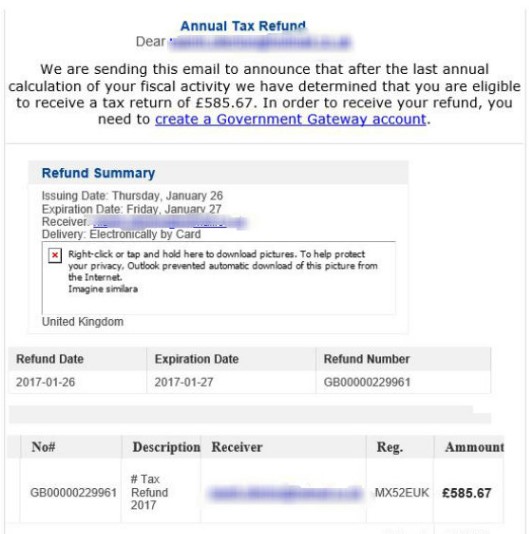
This email will read something like
“This is to inform you that after the last annual calculation of your fiscal activity, we have determined that you’re eligible to receive a tax rebate of _____. To receive this refund, you need to create a Government Gateway Account”.
Then this “Government Gateway Account” link would redirect you to a page that could extract your personal information like this:
2. New Tax Collection Scams

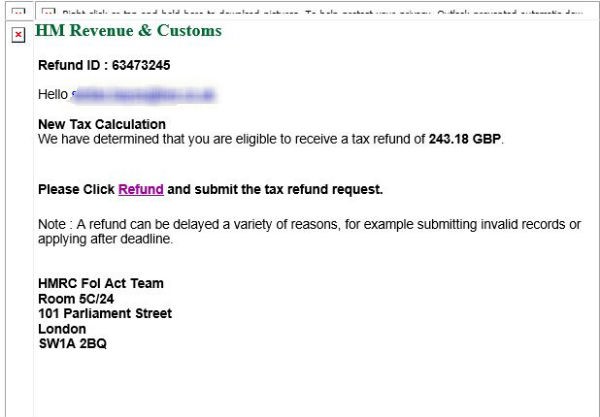
This email will read, under the subheading “New Tax Calculation”:
“We have determined that you are eligible to receive a tax refund of ____”
It will also try to get the recipient to click on a tax refund link to extract personal information as shown here:
3. Classic ‘Tax Refund’ Scam

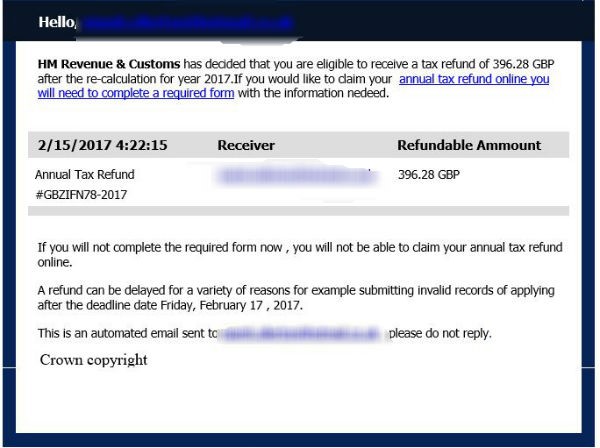
Yet another authentic-looking tax scam email but with dodgy English is this one. This classic HMRC tax refund scam email will read something like
“You are eligible to receive a tax refund of _____”.
Through a link, it will attempt to take you to a page claiming to have a “form” that you need to complete to get your tax refund that looks like this:
7 Types of HMRC Phishing Scams to be aware of
1. Email scams


One very common HMRC phishing scam is an email that tells you you’re eligible to get an employment income support scheme in light of the pandemic. There’s also a “failed direct debit” scam that’s going around that claims you entered the wrong bank details to claim your refund and you now have to enter it again.
2. Text scams

3. Phone scams

4. HMRC refund companies
You may receive texts or emails that offer to apply for a tax refund on your behalf in exchange for a fee. Just know that these refund companies aren’t connected with HMRC in any way.
5. WhatsApp scams
6. Social media scams

7. HMRC customs duty scams
How Do You Prevent These HMRC Scams?


1. Check the email greeting
If the email greets you as “Dear Customer”, it’s most likely a bogus email.
2. Check the senders’ address
Remember that an authentic HMRC email address would end with @hmrc.gov.uk.
3. Do NOT open any links or attachments
HMRC never asks you to open links or attachments that require you to enter personal or bank details. So, any text message or email that includes links or attachments with such requests is a bogus one and any personal data should only be added via the safe HMRC gateway.
4. Genuine organizations won’t ask for personal details
Out of the blue, there is no way that HMRC or any bank or organization is going to ask you for your bank details such as a password, or a pin, if they’re authentic and trustworthy.
5. Take action
The next time you receive phishing emails or are subject to HMRC tax refund scams, forward these suspicious messages to phishing@hmrc.gsi.gov.uk. You can even look up GOV.UK for information on how to prevent scams and report them and identify genuine HMRC contacts.
Closing Thoughts
Hopefully, this guide has provided you with valuable information about how to identify and report HMRC tax refund scams circulating in the UK to keep your financial health balanced. But if you want more information on this matter, you can head to these governmental guidance articles:
Phishing and bogus emails HM Revenue & Customs Examples
Check if an email you have received from HMRC is genuine
HMRC warns on tax refund scams
Or report any suspected fraud to the National Fraud Intelligence Bureau called Action Fraud and you can find all types of frauds they deal with here.
Author Profile


- Online Media & PR Strategist
- As a London-based Chief Marketing Officer at the digital marketing agency ClickDo Ltd I blog regularly about London, lifestyle, technology, business and many more topics.
Latest entries


